Reaching Higher: Biomechanics of the Shoulder Complex and Upper Limb - Chiropractic Continuing Education, Biomechanics, 5 Hours
Reaching Higher: Biomechanics of the Shoulder Complex and Upper Limb - Chiropractic Continuing Education, Biomechanics, 5 Hours
Approved for 5 Hours
Here's How Simple It Is:
- Watch the material online
- Complete the quiz online
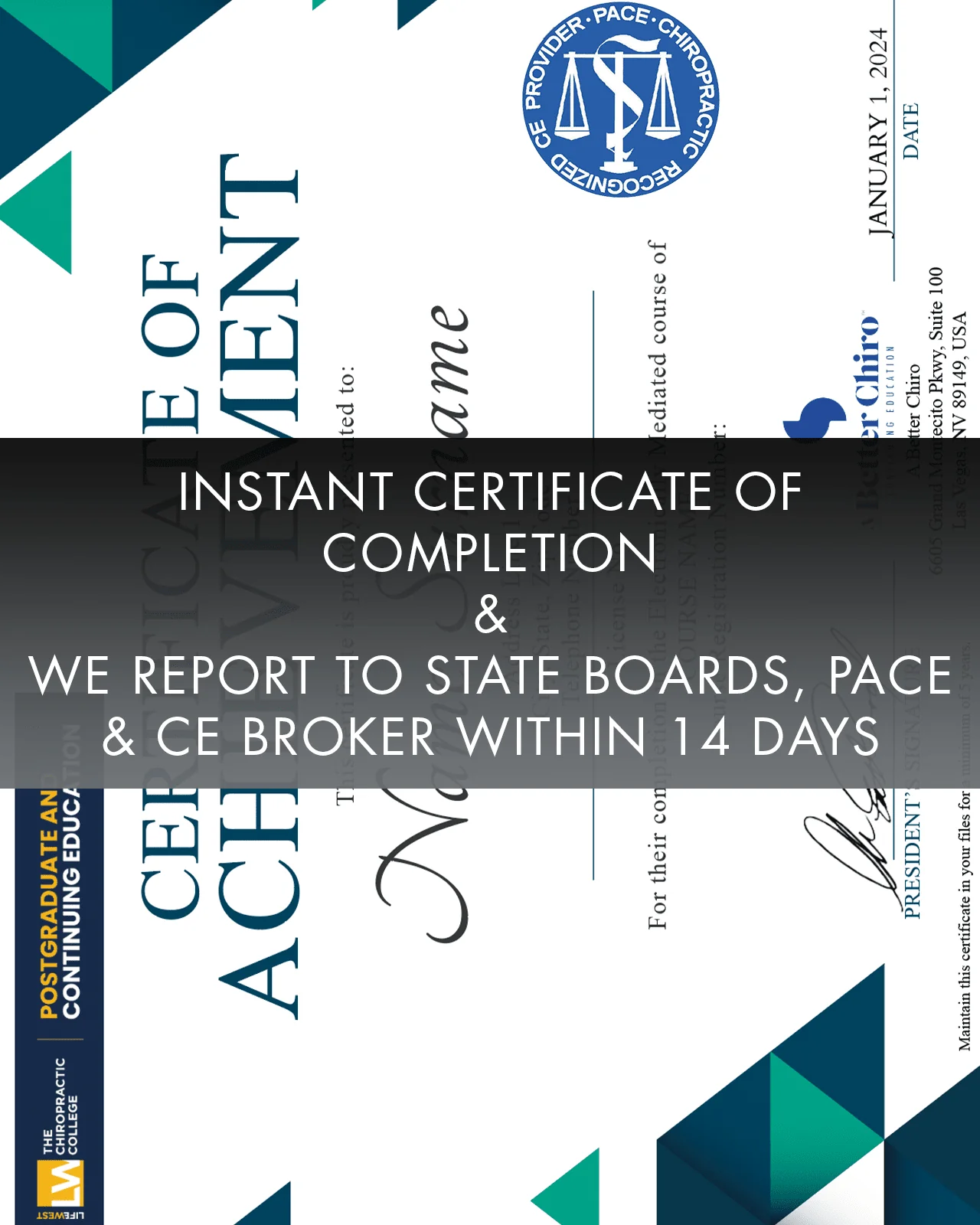
- Get your certificate and earn credits towards your license renewal
- ABetterChiro.com automatically reports your completions to your state board (if applicable) within 14 days
Course Outcome
≥93% of participants will expand their expertise in assessing and treating upper quadrant dysfunctions through biomechanical analysis, myofascial integration, and holistic rehabilitation strategies.
Course Objectives
After completing this course, the participant will be able to:
- Explain the biomechanical function and interrelated anatomy of the shoulder, neck, and upper back within the context of upper quadrant mobility and stability.
- Describe the role and continuity of fascia and myofascial meridians in coordinating movement and transmitting force.
- Perform biomechanical assessments of the upper quadrant using clinical observation, movement analysis, and functional testing.
- Identify common postural and movement errors contributing to injury and dysfunction in the cervical, thoracic, and shoulder regions.
- Develop individualized treatment and injury prevention plans incorporating the theory of myofascial chains and core stability principles.
Who Should Enroll?
- Chiropractors and Physical Therapists: Clinicians working with musculoskeletal and postural dysfunctions who want to integrate fascia-based movement assessment and rehabilitation techniques into patient care.
- Manual Therapists and Massage Therapists: Practitioners seeking to better understand the fascial system’s role in shoulder, neck, and upper back pain, and how to address it through hands-on work and guided movement.
- Athletic Trainers, Rehabilitation Specialists, and Exercise Professionals: Professionals supporting clients recovering from upper body injuries or aiming to optimize movement mechanics and prevent overuse patterns.
Course Codes (if applicable):
- Approved for: AK, CO, CT, DC, DE, FL, GA, IA, ID, IL, IN, KS, MA, MD, ME, MI, MN, MO, MS, MT, NC, ND, NE, NH, NJ, NY, OH, OR, PR, RI, SC, SD, TN, UT, VA, VI, VT, WA, WY
- PACE/CE Broker: 1329310
Original: $69.97
-70%$69.97
$20.99Product Information
Product Information
Shipping & Returns
Shipping & Returns
Description
Approved for 5 Hours
Here's How Simple It Is:
- Watch the material online
- Complete the quiz online
- Get your certificate and earn credits towards your license renewal
- ABetterChiro.com automatically reports your completions to your state board (if applicable) within 14 days
Course Outcome
≥93% of participants will expand their expertise in assessing and treating upper quadrant dysfunctions through biomechanical analysis, myofascial integration, and holistic rehabilitation strategies.
Course Objectives
After completing this course, the participant will be able to:
- Explain the biomechanical function and interrelated anatomy of the shoulder, neck, and upper back within the context of upper quadrant mobility and stability.
- Describe the role and continuity of fascia and myofascial meridians in coordinating movement and transmitting force.
- Perform biomechanical assessments of the upper quadrant using clinical observation, movement analysis, and functional testing.
- Identify common postural and movement errors contributing to injury and dysfunction in the cervical, thoracic, and shoulder regions.
- Develop individualized treatment and injury prevention plans incorporating the theory of myofascial chains and core stability principles.
Who Should Enroll?
- Chiropractors and Physical Therapists: Clinicians working with musculoskeletal and postural dysfunctions who want to integrate fascia-based movement assessment and rehabilitation techniques into patient care.
- Manual Therapists and Massage Therapists: Practitioners seeking to better understand the fascial system’s role in shoulder, neck, and upper back pain, and how to address it through hands-on work and guided movement.
- Athletic Trainers, Rehabilitation Specialists, and Exercise Professionals: Professionals supporting clients recovering from upper body injuries or aiming to optimize movement mechanics and prevent overuse patterns.
Course Codes (if applicable):
- Approved for: AK, CO, CT, DC, DE, FL, GA, IA, ID, IL, IN, KS, MA, MD, ME, MI, MN, MO, MS, MT, NC, ND, NE, NH, NJ, NY, OH, OR, PR, RI, SC, SD, TN, UT, VA, VI, VT, WA, WY
- PACE/CE Broker: 1329310