The Intricacies of Joint Hypermobility: Clinical Understanding and Treatment Strategies - Chiropractic Continuing Education, Orthopedics, 6 Hours
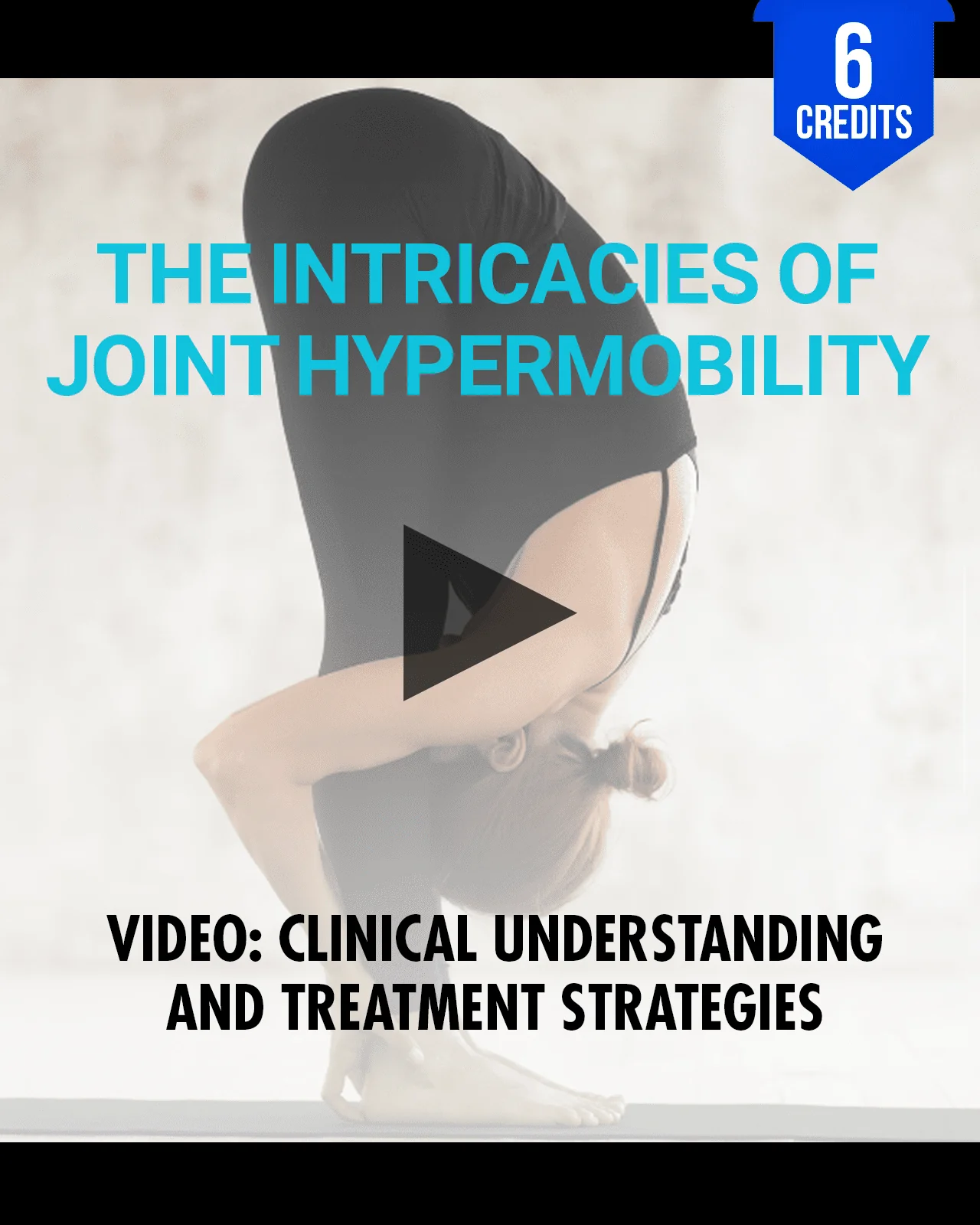
The Intricacies of Joint Hypermobility: Clinical Understanding and Treatment Strategies - Chiropractic Continuing Education, Orthopedics, 6 Hours
Approved for 6 Hours
Here's How Simple It Is:
- Watch the material online
- Complete the quiz online
- Get your certificate and earn credits towards your license renewal
- ABetterChiro.com automatically reports your completions to your state board (if applicable) within 14 days
Course Outcome
≥93% of participants will gain a comprehensive understanding of joint hypermobility disorders, including assessment tools, clinical presentations, and appropriate referral strategies, enabling safer and more informed treatment planning for clients across diverse populations.
Course Objectives
After completing this course, the participant will be able to:
- Differentiate between joint hypermobility (JH), hypermobility spectrum disorders (HSD), Ehlers–Danlos syndromes (EDS), and other heritable disorders of connective tissue (HDCT).
- Describe the pathophysiology and genetic underpinnings of JH-related conditions, including Marfan syndrome and Osteogenesis Imperfecta.
- Identify the clinical signs, musculoskeletal effects, and extra-musculoskeletal manifestations of symptomatic joint hypermobility (SJH).
- Utilize validated assessment tools such as the Beighton Score to screen for Generalized Joint Hypermobility (GJH) and identify red flags warranting further investigation.
- Understand the prevalence and implications of hypermobility in specific populations such as dancers, gymnasts, and elite athletes.
- Develop awareness of comorbidities and complications associated with JH, including chronic pain, fatigue, autonomic dysfunction, and injury susceptibility.
Who Should Enroll?
- Chiropractors: Providers managing patients with chronic musculoskeletal pain, postural instability, or unexplained injuries who want to better assess and accommodate hypermobility disorders in treatment.
- Physical Therapists, Manual Therapists, and Bodyworkers: Practitioners seeking to work safely and effectively with hypermobile clients while avoiding overstretching, joint destabilization, or unintentional harm.
Course Codes (if applicable):
- Approved for: AK, CO, CT, DC, DE, FL, GA, IA, ID, IL, IN, KS, MA, MD, ME, MI, MN, MO, MS, MT, NC, ND, NE, NH, NJ, NY, OH, OR, PR, RI, SC, SD, TN, UT, VA, VI, VT, WA, WY
- PACE/CE Broker: 1329331
Original: $83.97
-70%$83.97
$25.19Product Information
Product Information
Shipping & Returns
Shipping & Returns
Description
Approved for 6 Hours
Here's How Simple It Is:
- Watch the material online
- Complete the quiz online
- Get your certificate and earn credits towards your license renewal
- ABetterChiro.com automatically reports your completions to your state board (if applicable) within 14 days
Course Outcome
≥93% of participants will gain a comprehensive understanding of joint hypermobility disorders, including assessment tools, clinical presentations, and appropriate referral strategies, enabling safer and more informed treatment planning for clients across diverse populations.
Course Objectives
After completing this course, the participant will be able to:
- Differentiate between joint hypermobility (JH), hypermobility spectrum disorders (HSD), Ehlers–Danlos syndromes (EDS), and other heritable disorders of connective tissue (HDCT).
- Describe the pathophysiology and genetic underpinnings of JH-related conditions, including Marfan syndrome and Osteogenesis Imperfecta.
- Identify the clinical signs, musculoskeletal effects, and extra-musculoskeletal manifestations of symptomatic joint hypermobility (SJH).
- Utilize validated assessment tools such as the Beighton Score to screen for Generalized Joint Hypermobility (GJH) and identify red flags warranting further investigation.
- Understand the prevalence and implications of hypermobility in specific populations such as dancers, gymnasts, and elite athletes.
- Develop awareness of comorbidities and complications associated with JH, including chronic pain, fatigue, autonomic dysfunction, and injury susceptibility.
Who Should Enroll?
- Chiropractors: Providers managing patients with chronic musculoskeletal pain, postural instability, or unexplained injuries who want to better assess and accommodate hypermobility disorders in treatment.
- Physical Therapists, Manual Therapists, and Bodyworkers: Practitioners seeking to work safely and effectively with hypermobile clients while avoiding overstretching, joint destabilization, or unintentional harm.
Course Codes (if applicable):
- Approved for: AK, CO, CT, DC, DE, FL, GA, IA, ID, IL, IN, KS, MA, MD, ME, MI, MN, MO, MS, MT, NC, ND, NE, NH, NJ, NY, OH, OR, PR, RI, SC, SD, TN, UT, VA, VI, VT, WA, WY
- PACE/CE Broker: 1329331